
Dive Sites
Dive Sites Near Amila Dive Beach Resort: Danjugan, Mad Max & Turtle Island
From our beachfront base in Bulata you can reach an unusual range of dive sites — gentle coral gardens for first-timers, dramatic walls, and a world-class macro pier — most only 5–20 minutes by boat.
What are the best dive sites near Amila Dive Beach Resort?
Amila’s dive sites lie off Brgy. Bulata, Cauayan, in southern Negros Occidental, is in three clusters: the reefs and walls around Danjugan Island, the Mad Max macro pier, and the reefs around Turtle Island. Most are 5–20 minutes by boat, and several — including the House Reef — are right in front of the resort. Sites range from shallow coral gardens for beginners and courses to deep walls for advanced divers, with a world-class muck/macro site at the old Mad Max pier.
Typical sightings include sea turtles, giant clams, healthy hard- and soft-coral gardens, black-tip reef sharks, and standout macro life (ghost pipefish, frogfish, seahorses, nudibranchs). Diving is possible year-round; December–May brings the calmest water and best visibility.
Quick facts
- Location: off Brgy. Bulata, Cauayan (near Sipalay), Negros Occidental
- Areas: Danjugan Island · Mad Max pier · Turtle Island
- Boat time: most 5–20 min; House Reef in front of the resort
- Depth range: ~5 m shallow reefs to 40 m+ walls; Mad Max 5–24 m
- Levels: beginner / try-dive to advanced
- Signature site: Mad Max — abandoned Maricalum mine pier, a macro-photography haven
- Marine life: turtles, giant clams, black-tip reef sharks; macro: ghost pipefish, frogfish, nudibranchs
- Protection: several sites inside marine reserves / no-take zones
- Best visibility: December–May (peak January–April); diving year-round
Dive site overview
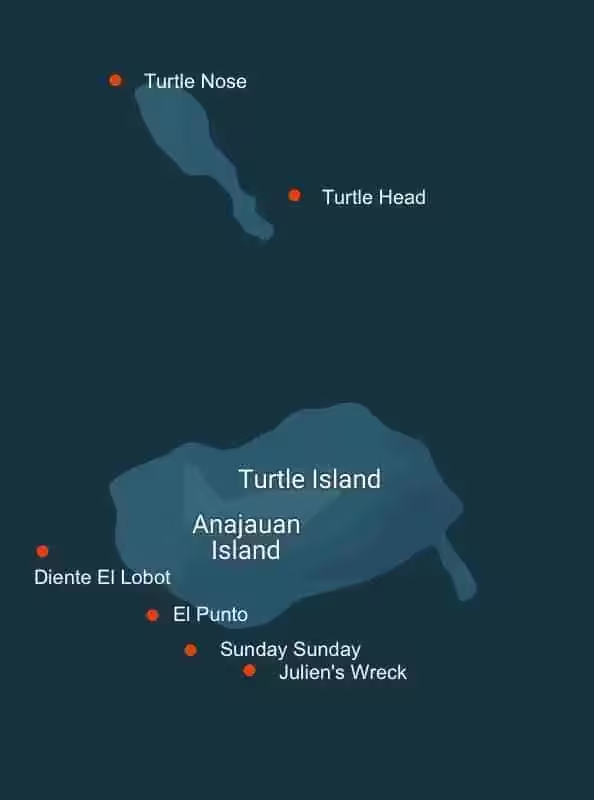
Amila’s dive sites divide naturally into three areas, all a short boat ride from the beach. The Danjugan Island reefs and walls (5–15 min) run from the shallow House Reef and the coral-garden site “The Clams” to deep walls like Tanguigue and Bonifacio; several sit inside the island’s marine sanctuaries. The Mad Max pier (about 5 min) — an abandoned copper-mine port — is the area’s muck and macro headquarters. Around Turtle Island lie reefs like Head & Nose, the beginner-friendly Sunny Sunday and Julien’s Wreck, the drift at El Punto, and the nudibranch-rich Nudiland.
For the wider ecology, see our Marine Life pillar; for the protected-area story, the Danjugan Island pillar.
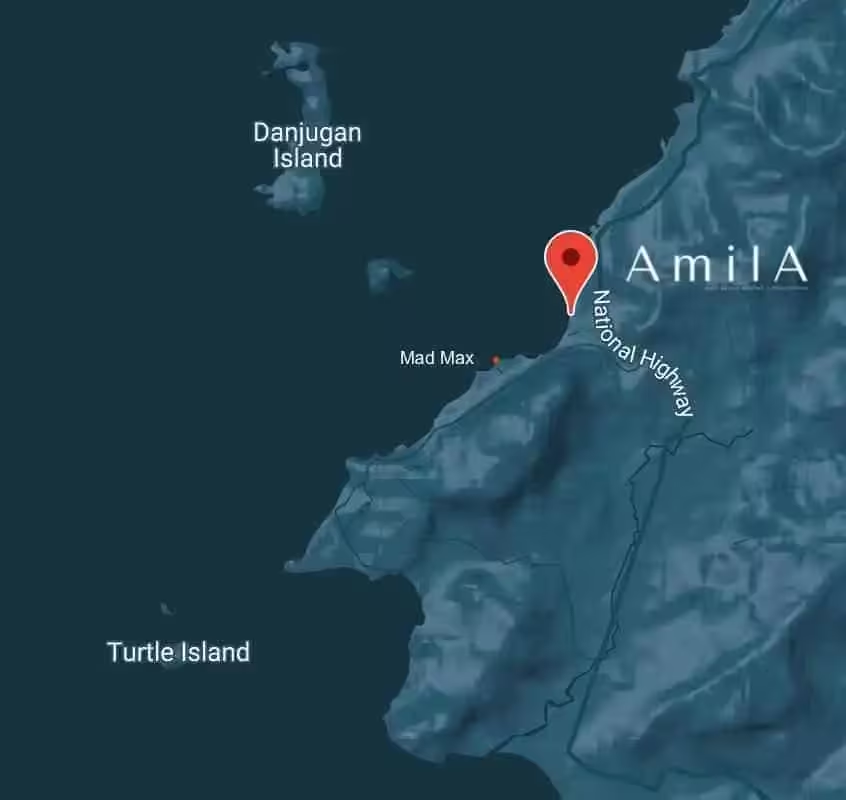
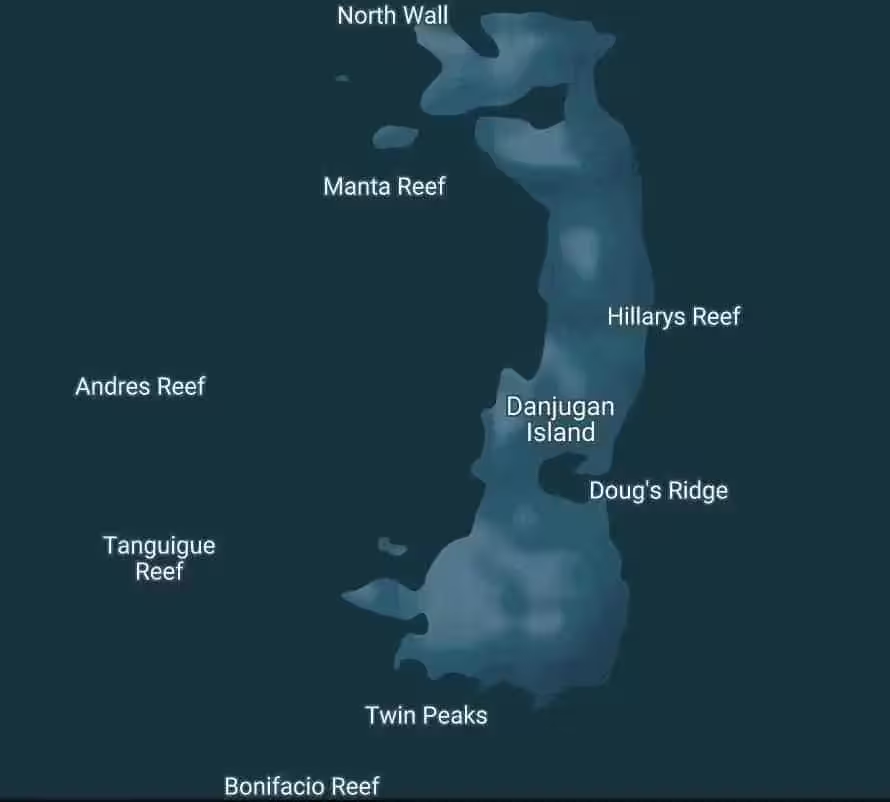
Around Danjugan Island & Bulata (5–15 min by boat)
| Dive site | Type | Depth | Level | What you’ll see |
|---|---|---|---|---|
| House Reef / Bulata | Reef | shallow | Beginner+ | Coral garden, reef fish; try-dives, courses, check-out dives (in front of resort) |
| The Clams | Reef / coral garden | 5–30 m | All levels | Best coral garden in the area; fan corals, giant clams, anemonefish, clownfish, triggerfish |
| Wilson Reef | Reef (soft coral) | 5–15 m | Conditions-dependent | Long shallow reef of soft corals; best in good conditions |
| Tanguigue Reef | Reef & wall | 17–40 m+ | Advanced | Soft/hard & big fan corals; snappers, blue trevally, Napoleon (humphead) wrasse, turtles, potato groupers |
| Bonifacio Reef | Reef | 10–40 m | All levels | Southern tip of Danjugan; Napoleon wrasse, moray eels, turtles, trevally |
| Twin Peaks | Reef (rock formations) | 8–35 m | All levels | ‘Ancient-city’ rock formations covered in hard corals, about 50 m off the beach |
| North Wall | Reef (current-exposed) | 5–35 m | Advanced | Small cavern with mantis shrimp; often exposed to current & waves |
| Danjugan reefs (incl. Manta Reef) | Reef & wall | ~10 min boat | Beginner–Advanced | Healthy hard & soft coral, turtles, giant clams, black-tip reef sharks, schooling fish |
Mad Max — the macro pier (about 5 min by boat)
Mad Max is an abandoned Maricalum copper-mine port that closed around 20 years ago, now a combination of coral reef and muck diving under the pillars of the old pier. Depth 5–24 m, suitable for all levels. It is the area’s macro headquarters: ghost pipefish, frogfish, nudibranchs, lionfish, moray eels, sea snakes, trevally and dragonet. For macro photographers it is a little slice of heaven — see the ghost pipefish that shelter here.
Around Turtle Island (short boat ride)
| Dive site | Type | Depth | Level | What you’ll see |
|---|---|---|---|---|
| Head & Nose | Reef | 5–30 m | Experienced | Two sites on one reef (NW corner); damselfish, anthias, bannerfish, huge gorgonians |
| Sunny Sunday | Reef (shallow) | 5–10 m | Beginner | Near Turtle Island’s south beach; tropical fish, pufferfish, groupers |
| El Punto | Reef (drift) | 8–40 m | All levels / easy | SW corner steep slope; turtles, tropical fish, octopus, stonefish; in the marine reserve |
| Diente De Lobo | Reef (valleys / formations) | to 40 m+ | Experienced | West side facing open sea; underwater valleys, rock & coral formations; damselfish, batfish, bannerfish |
| Julien’s Wreck | Wreck | ~7 m | Beginner + snorkel | Overgrown freighter; vivacious fish, colourful corals, ribbon eels; good for snorkelling too |
| Nudiland | Reef / macro | to 30 m | All levels | In the marine reserve; many nudibranchs, Napoleon wrasse, eagle ray, trevally, fusiliers, moray eels |
Difficulty levels
| Level | Sites | What defines it |
|---|---|---|
| Beginner / try-dive | House Reef, Sunny Sunday, Julien’s Wreck | Shallow, sheltered, no current |
| All levels | The Clams, Bonifacio, El Punto, Mad Max, Danjugan reefs, Nudiland, Turtle Island, Twin Peaks | Flexible depth; the guide sets the plan to the diver |
| Advanced | Tanguigue, North Wall, Head & Nose, Diente De Lobo | Depth 30–40 m+ and/or current exposure |
Marine life by dive site
| Dive site | Signature marine life |
|---|---|
| The Clams | Giant clams, fan corals, anemonefish, clownfish, triggerfish |
| Tanguigue / Bonifacio | Napoleon (humphead) wrasse, turtles, trevally, potato groupers, moray eels |
| Mad Max | Ghost pipefish, frogfish, nudibranchs, lionfish, moray eels, sea snakes, dragonet |
| Danjugan reefs | Turtles, giant clams, black-tip reef sharks, schooling fish |
| Head & Nose | Gorgonians, anthias, bannerfish, damselfish |
| El Punto | Turtles, octopus, stonefish, schooling tropical fish |
| Diente De Lobo | Damselfish, batfish, bannerfish |
| Nudiland | Nudibranchs, Napoleon wrasse, eagle ray, fusiliers, moray eels. |
For what these species are and how the reefs stay so rich, see our Marine Life pillar.
Best conditions
| December – May (dry/high) | January – April (peak) | June – November (wet) |
|---|---|---|
| Calmest water, best visibility — walls, deep reefs, photography | Clearest water of the year | Variable visibility, occasional currents; macro & reef still very good, fewer visitors |
Diving is possible year-round because many sites are sheltered and close to shore. Current-exposed sites (North Wall, Tanguigue) and the drift at El Punto are best on calm days — the dive team reads conditions daily and picks sites to match.
Photography opportunities
The area rewards two very different photographers. Macro / muck: Mad Max is the headquarters — ghost pipefish, frogfish and nudibranchs at easy depths with time to work a subject; Nudiland adds more nudibranchs and the chance of an eagle ray. Wide-angle: the fan corals and gorgonians on Tanguigue and Head & Nose, and the giant clams at The Clams, suit reef-scapes — best in the clearest water of January–April. Dive the same low-impact etiquette either way.
Macro highlights
For macro-focused divers, two sites stand out. Mad Max — under the old pier’s pillars — is the reliable star: ghost pipefish (ornate & robust), frogfish, nudibranchs, shrimps and seahorses in the silt and structure. Nudiland, in the Turtle Island marine reserve, is named for its nudibranch density along coral slopes between sandy and rocky valleys. Both reward slow, close, well-controlled diving.
Safety notes
- Dive within your certification. Deep walls (Tanguigue, Bonifacio, El Punto, Head & Nose, Diente De Lobo reach 30–40 m+) are for advanced divers; shallow sites suit beginners and courses.
- Currents & drift. North Wall and Tanguigue are current-exposed; El Punto is a drift dive — follow the guide’s briefing and dive on suitable days.
- Look, don’t touch — some residents are venomous. Lionfish, scorpionfish and the well-camouflaged stonefish (El Punto) are venomous; sea snakes at Mad Max are docile but never handled.
- Standard practice. Buddy checks, safety stops, and advance booking are recommended; we dive with a PADI 5-Star partner.
Responsible diving
Several of these sites sit inside marine reserves and no-take zones — the Danjugan Island sanctuaries, and the reserve around El Punto and Nudiland — which is exactly why they are worth diving. Maintain good buoyancy and never touch or stand on coral; keep your distance from turtles, sharks and every other animal; take nothing and feed nothing; and support the protected areas through park fees. Read the full conservation story on the Danjugan Island pillar.
Diving & dive-site FAQs
Questions about certification, gear, how far the sites are, or what you’ll see? Our diving FAQ answers the common ones in detail, and the dive team is always happy to help plan your dives.
Dive these reefs with us
Amila runs a full dive operation with sites to suit every level. Whether you want to try scuba for the first time, work through a PADI course, or simply log good dives on healthy reefs, our Scuba Diving pages cover the options. If you are weighing up the wider area, see Discover Sipalay.