
Frogfish in the Philippines
Frogfish in the Philippines
Finding your first frogfish is a moment most divers never forget.
At first, your dive guide points toward what looks like an ordinary sponge or an oddly shaped rock. Then it moves. Suddenly you realise you’re looking at one of the ocean’s most extraordinary ambush predators.
The reefs around Sipalay in Negros Occidental offer excellent opportunities to encounter frogfish throughout the year. Their remarkable camouflage, unusual hunting strategy, and bizarre appearance make them one of the highlights of macro diving in the Philippines.
Whether you’re an underwater photographer or simply fascinated by unusual marine life, spotting a frogfish is often one of the most memorable moments of any dive holiday.
Frogfish at a Glance
Feature | Information |
|---|---|
Common Name | Frogfish |
Family | Antennariidae |
Size | Usually 5–30 cm |
Habitat | Coral reefs, rubble slopes, sponges, soft corals |
Best For | Macro diving & underwater photography |
Dangerous? | No |
Difficulty to Spot | Moderate to very difficult |
Best Time | Year-round |
What Makes Frogfish So Special?
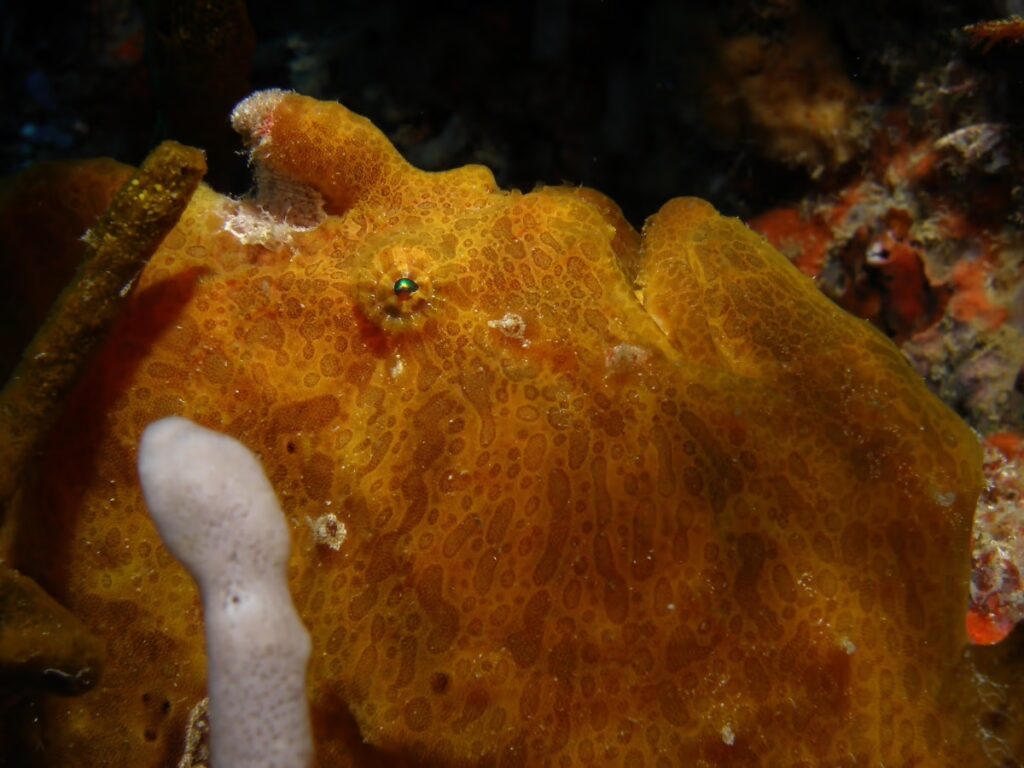
Frogfish belong to the anglerfish family and are among the best-camouflaged animals in the ocean.
Unlike most reef fish, they don’t swim continuously. Instead, they spend hours—or even days—remaining perfectly still while waiting for prey.
Rather than chasing smaller fish, they allow food to come to them.
When an unsuspecting fish approaches, a frogfish can open its mouth incredibly fast, creating a powerful suction that pulls its prey inside in just milliseconds. It is one of the fastest feeding mechanisms in the animal kingdom.
Masters of Camouflage
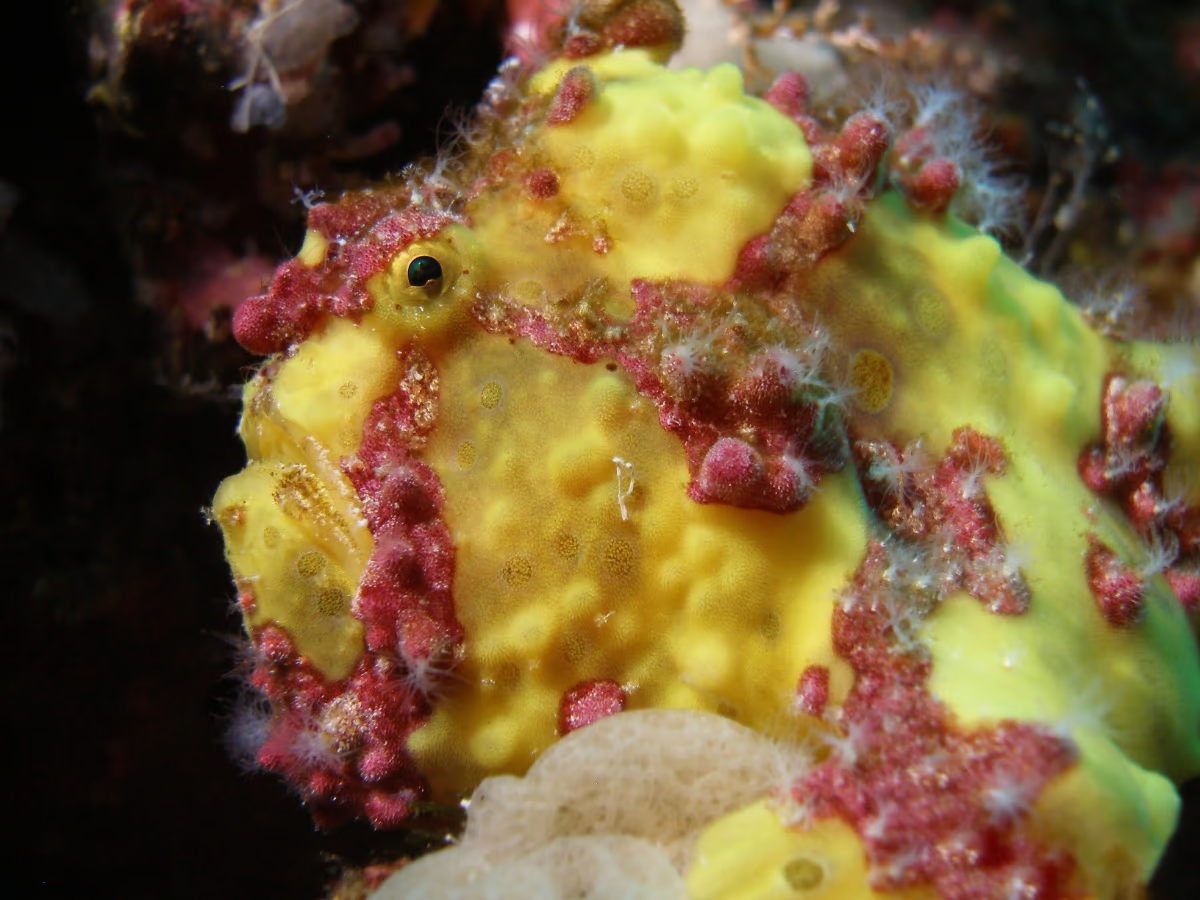
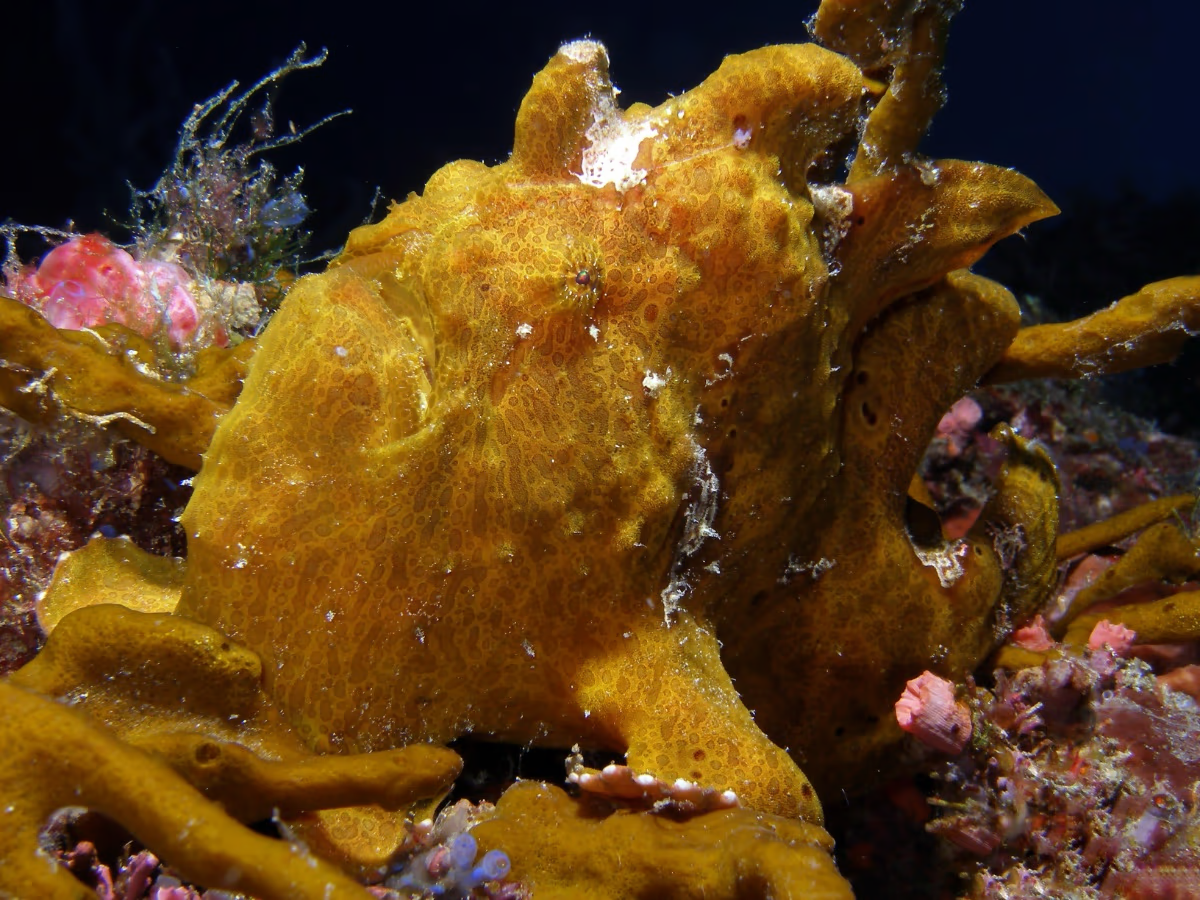
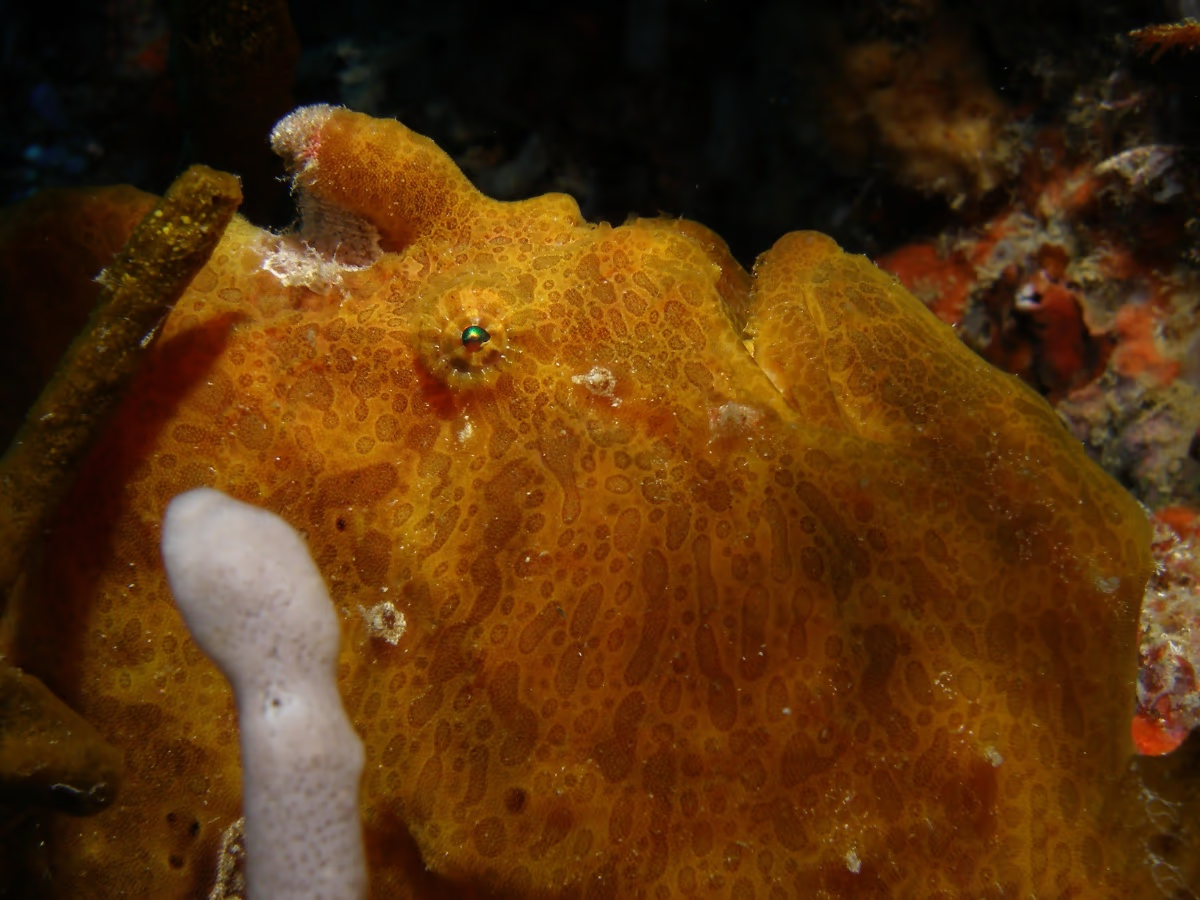
One reason scuba divers become so excited about frogfish is that every individual looks different.
Depending on its surroundings, a frogfish may resemble:
- a sponge
- algae
- coral
- rubble
- rock
- soft coral
- seaweed
Some species can even slowly change colour over several weeks to match their environment more closely.
This extraordinary camouflage protects them from predators while helping them ambush prey.
For divers, it also explains why finding one without an experienced guide can be incredibly difficult.
Where Can You Find Frogfish Near Amila?
The dive sites around Sipalay provide excellent habitat for several frogfish species.
Good places to search include:
- rubble slopes
- sponge-covered reefs
- artificial structures
- macro dive sites
- coral heads with soft corals
Because frogfish rely on camouflage rather than movement, patient observation is essential.
Our experienced dive guides know the areas where frogfish are regularly encountered and carefully search these habitats during macro dives.
Important: Marine life is never guaranteed. Every encounter is a privilege and depends on natural conditions.
Why Macro Divers Love Frogfish
For underwater photographers, frogfish are dream subjects.
Unlike many reef fish, they usually remain in one position for long periods, allowing photographers to:
- experiment with lighting
- refine composition
- capture close-up portraits
- photograph tiny details
- practice focus techniques
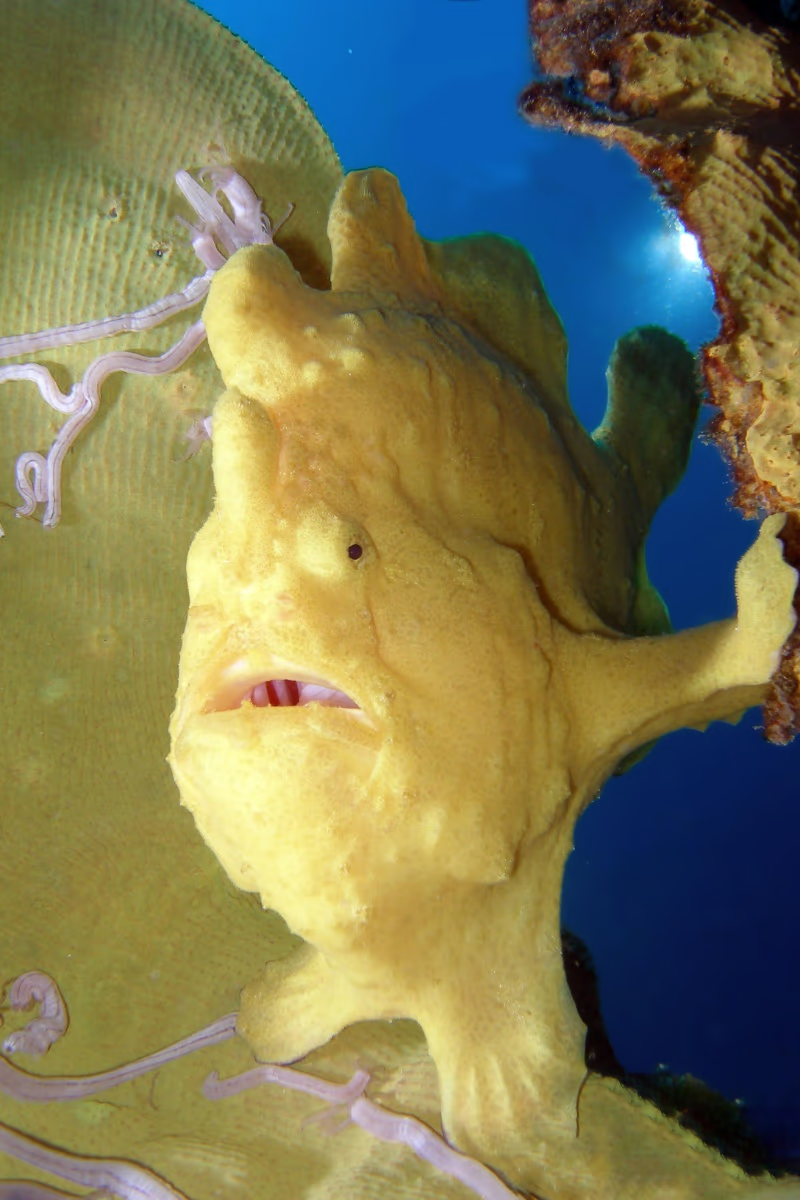
Their unusual expressions, textured skin, and striking colours create some of the most iconic images in macro photography.
Behaviour
Although frogfish appear slow, they are highly effective predators.
Interesting behaviours include:
- walking across the seabed using modified fins
- gently rocking to imitate drifting algae
- using a specialised lure above the mouth to attract prey
- swallowing prey almost as large as themselves
Watching a frogfish hunt is rare but unforgettable.
Are Frogfish Dangerous?
No.
Frogfish are harmless to divers.
They are shy, slow-moving animals that rely entirely on camouflage rather than aggression.
The best way to enjoy an encounter is to observe quietly while giving the animal plenty of space.
Never touch or move a frogfish for a photograph.
Respectful diving helps protect these remarkable animals and ensures future divers can enjoy the same experience.
Responsible Frogfish Photography
Good underwater photography begins with good buoyancy.
When photographing frogfish:
- Never touch the animal.
- Never move it into a better position.
- Avoid resting on coral.
- Control your fins carefully.
- Limit flash use if several photographers are present.
- Give other divers an opportunity to observe.
Ethical photography always comes before the perfect picture.
Why Healthy Reefs Matter
Frogfish depend on healthy reef ecosystems.
Protected reefs support:
- abundant prey species
- diverse sponge communities
- healthy coral growth
- stable habitats
Every responsible dive helps support marine conservation and the long-term protection of these fascinating creatures.
Can You See Frogfish All Year?
Yes.
Frogfish can be encountered throughout the year around Sipalay.
Because they are masters of camouflage, sightings depend more on careful observation and local knowledge than on season.
Some dives may reveal several individuals, while others may reveal none.
That unpredictability is part of what makes each encounter so rewarding.
Frequently Asked Questions
Are frogfish common in the Philippines?
The Philippines is one of the world’s best destinations for macro diving, and frogfish are regularly encountered in suitable habitats.
How big are frogfish?
Most species encountered by recreational divers range between approximately 5 and 30 centimetres.
Are frogfish poisonous?
No. Frogfish are harmless to humans.
Can beginners see frogfish?
Yes. Frogfish can be seen on recreational dives suitable for Open Water divers, depending on the dive site.
What camera lens works best?
Macro lenses are generally ideal, although larger frogfish can also make excellent subjects for mid-range lenses.
Experience Frogfish Diving at Amila Dive Beach Resort
Macro diving around Sipalay offers countless opportunities to discover the hidden life of the reef.
Whether you’re searching for frogfish, ghost pipefish, nudibranchs, seahorses or other fascinating critters, our experienced dive team knows where to look while always respecting the marine environment.
If discovering the ocean’s smallest treasures is your passion, we’d love to show you the incredible underwater world around Amila Dive Beach Resort.