
Marine Life : A Coral Triangle Field Guide
Marine Life Around Amila Dive Beach Resort: A Coral Triangle Field Guide
Plan your dives with our team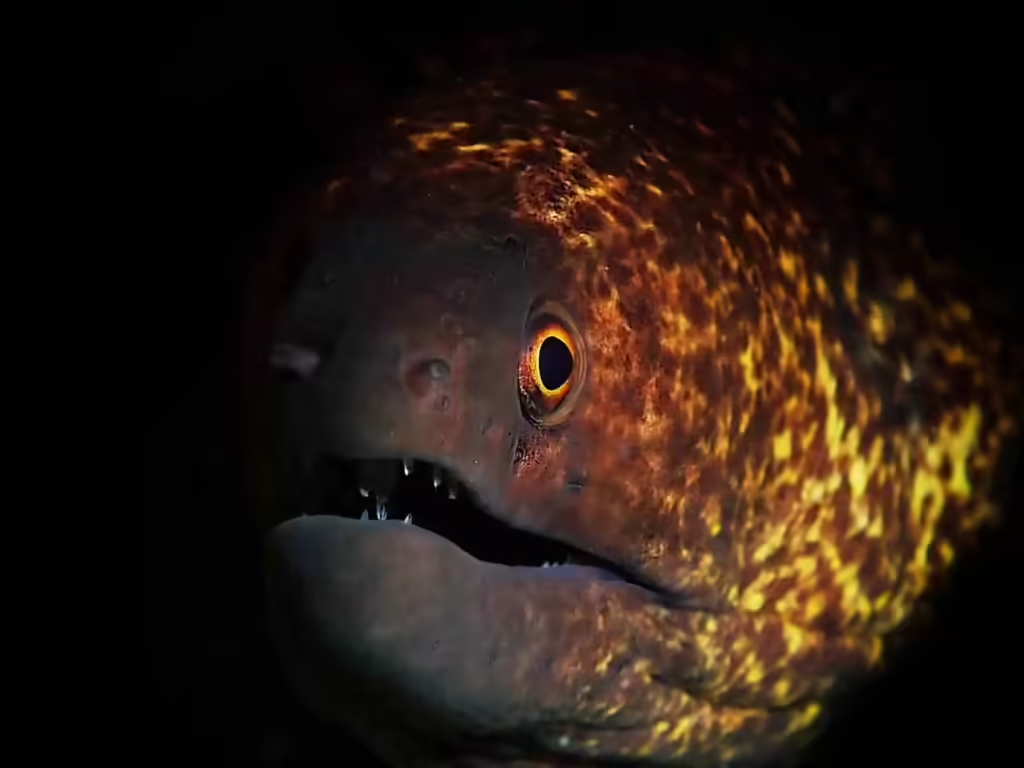
What marine life can you see around Amila?
Around Amila Dive Beach Resort, on the Bulata coast of Negros Occidental, you can see sea turtles, giant clams, extensive hard- and soft-coral gardens, and world-class macro life — ghost pipefish, frogfish, nudibranchs and seahorses. Reef fish are everywhere: snappers, fusiliers, anthias, bannerfish, triggerfish, pufferfish and groupers, with larger Napoleon (humphead) wrasse and trevally on the deeper reefs.
On the right sites you may also meet black-tip reef sharks, eagle rays, octopus and moray eels, and the muck under the old Mad Max pier is one of the best macro-photography spots in southern Negros. Nothing underwater is guaranteed — that is the nature of wild reefs — but the area reliably offers variety, healthy coral, and short boat rides to an unusual range of habitats.
Quick facts
- Where: waters off Brgy. Bulata, Cauayan & Sipalay, Negros Occidental
- Region: the Coral Triangle — the centre of marine biodiversity
- Coral: 76%+ of the world’s reef-building coral species live in the Coral Triangle
- Reef fish: 2,000+ species region-wide
- Sea turtles: hawksbill & green
- Signature macro: ghost pipefish, frogfish, nudibranchs
- Best visibility: December–May (peak January–April)
- Diving: year-round
Why these waters are so alive
The waters off Amila are among the richest on Earth for one reason of geography: they sit inside the Coral Triangle.
The Coral Triangle is a roughly six-million-square-kilometre area spanning Indonesia, Malaysia, the Philippines, Papua New Guinea, Timor-Leste and the Solomon Islands — by a wide margin the richest marine region on the planet. More than 76% of the world’s reef-building coral species live here, alongside over 2,000 species of reef fish and six of the world’s seven sea turtle species. The southern Philippines is one of its recognised biodiversity hotspots.
Biodiversity on that scale changes what a dive feels like. A reef with hundreds of coral species builds more three-dimensional structure — overhangs, crevices, fans, branching thickets. That structure is habitat: every crevice a hiding place, every coral head a hunting ground. It is why the fish life is dense and the macro life world-class, and why the same dive can reward a diver chasing a turtle and a diver chasing a two-centimetre shrimp.
It helps that several local sites sit inside or beside protected marine areas, including the sanctuaries around Danjugan Island. Where reefs are protected from fishing, fish grow larger and more numerous and coral stays healthy — which is why the protected sites here feel noticeably busier than unmanaged reefs. The full story of that protection is on our Danjugan Island pillar.
Marine life by group
Macro: the small stuff that makes divers famous
If the area has a signature, it is macro life — and its headquarters is the old Mad Max pier, five minutes from the resort. This is where divers find ghost pipefish, frogfish, nudibranchs, seahorses and shrimps: the tiny, cryptic, spectacularly weird creatures that reward slow, close looking. The star is the ghost pipefish, a seahorse relative that drifts head-down among crinoids and soft coral, almost impossible to spot until it moves; both ornate and robust ghost pipefish are seen here. Frogfish ambush prey while disguised as sponges; nudibranchs bring jewel-box colour; and seahorses, pipefish and shrimps fill in the cast. For a closer look at one local specialist, see our feature on the ghost pipefish.
Reef fish: the everyday abundance
Reef fish are the constant background hum of every dive. Expect schooling yellow snappers and fusiliers moving in silver sheets; clouds of orange anthias over the coral; bannerfish and damselfish; triggerfish, pufferfish and boxfish; and groupers, including the bulky potato grouper, holding station in the blue. On the deeper reefs you may meet a Napoleon (humphead) wrasse — a large, curious, slow-growing fish classified as Endangered, and a genuine highlight — along with trevally hunting in packs. Around anemones you’ll find clownfish and anemonefish, and giant clams sit embedded in the coral with their mantles open.
Sea turtles
Two species of sea turtle live in the waters around Amila: the hawksbill and the green turtle, both seen regularly on the reefs and especially around Danjugan and Turtle Islands. The hawksbill, with its pointed beak and beautiful shell, is classified as Critically Endangered; the green turtle, larger and rounder-faced, is Endangered. Turtles nest on protected beaches in the area during the rainy season, an event managed entirely by the sanctuaries. Underwater, the rule is simple: watch, don’t touch, don’t chase — a resting turtle that isn’t harassed will often let divers share the reef with it for minutes at a time.
Sharks & rays
Yes, there are sharks around Amila — and no, they are not a danger to divers. The sharks here are reef species, not open-ocean giants, and they are shy. Black-tip reef sharks patrol some of the Danjugan reefs; they are small, cautious and no threat to people. Eagle rays, with their long tails and spotted backs, are sometimes seen gliding along the deeper slopes, notably around the Nudiland site. Neither is guaranteed, and both are the kind of sighting that makes a dive.
Corals & giant clams: the reef itself
It is easy to spend a whole dive hunting animals and forget that the reef is the main event. The local sites carry extensive hard-coral gardens, large soft-coral trees on the walls, and — a local signature — huge fan corals and gorgonians stretching into the current, especially on sites like Tanguigue Reef and the Head & Nose reef at Turtle Island. The aptly named site “The Clams” holds the best coral garden in the immediate area, studded with giant clams a metre or more across, their mantles patterned in electric blues and greens. Coral is a living animal, slow-growing and fragile; good buoyancy and no contact are the whole etiquette.
Critters & the venomous cast
Finally, the reef’s character actors. Octopus change colour and texture as they flow across the sand; moray eels watch from holes, with the occasional elegant ribbon eel among them; and the sand and rubble hide the masters of disguise — lionfish with their fanned venomous spines, well-camouflaged scorpionfish, and the genuinely dangerous stonefish, which looks exactly like an encrusted rock. Sea snakes are occasionally seen around the Mad Max pier. None is a threat to a diver who follows the golden rule of the reef: keep your hands to yourself and put nothing where you cannot see.
Where to see what
- Macro (ghost pipefish, frogfish, nudibranchs): Mad Max pier; Nudiland (Turtle Island)
- Sea turtles: Danjugan reefs, Bonifacio & Tanguigue Reefs, El Punto, Turtle Island
- Giant clams & coral gardens: The Clams, Danjugan reefs
- Napoleon wrasse, groupers, trevally: Tanguigue, Bonifacio, Nudiland
- Black-tip reef sharks: Danjugan reefs
- Eagle ray: Nudiland
- Fan corals & gorgonians: Tanguigue, Head & Nose
- Octopus, stonefish: El Punto
See the full site list on our Dive Sites page.
“The question we get most is ‘what will I see?’ — and the honest answer is: we don’t know until we’re in the water, and that’s the best part. Some divers surface buzzing about a turtle; others spent the whole dive on one frogfish and didn’t notice the turtle at all. Tell your guide what you’re hoping for — macro, turtles, coral, big fish — and we’ll pick the site and set the pace for it.”
— The Amila dive team
When to see it: seasons & timing
Diving here is a year-round activity — many sites are sheltered and close to shore — but conditions and visibility shift with the seasons.
- December – May (dry / high season): the calmest water and the best visibility, ideal for walls, deep reefs and photography.
- January – April (peak): typically the clearest water of the year.
- June – November (wet): more variable visibility and the occasional current, but reef and macro diving remain very good, with fewer visitors.
Macro subjects like frogfish and nudibranchs are present year-round; turtle nesting falls in the rainy season, is managed by the sanctuaries, and is never guaranteed as part of a dive. The dive team’s daily read of the water is the most reliable guide — tell us your dates and we’ll tell you what’s likely.
Diving in a living system: responsible encounters
A reef this rich is also this fragile, and how you dive decides what is left for the next diver. The etiquette here is simple and non-negotiable:
- Master your buoyancy and never touch or stand on coral — it is a living, slow-growing animal.
- Keep your distance from turtles, sharks and every other animal; never chase, corner or ride them.
- Take nothing, feed nothing, and put your hands nowhere you cannot see.
Several local sites sit within protected marine reserves and no-take zones — including the sanctuaries around Danjugan Island — where these rules are not just good manners but the reason the reef is worth diving. Choosing an operator that follows them, and supporting the marine-protected areas through park fees, is the most direct thing a visitor can do to keep these waters alive. It is also, not coincidentally, what makes the diving here so good.
How to dive and snorkel these reefs
You do not need to be a certified diver to meet this marine life. Shallow reefs and the house reef in front of the resort offer excellent snorkelling, with coral and reef fish just beneath the surface. For divers, Amila runs a full dive operation with sites to suit every level — gentle coral gardens for first-timers and courses, dramatic walls and macro sites for the experienced. Whether you want to try scuba for the first time, work through a PADI course, or simply log good dives on healthy reefs, our Scuba Diving pages cover the options and our Dive Sites page maps every local site.
Your marine-life questions answered
Want the specifics — whether the sharks here are dangerous, what a nudibranch actually is, whether you can photograph the macro life, or how the reefs are protected? Our marine-life FAQ answers the common questions in detail, and the dive team is always happy to talk through what you might see on your dates.
See it for yourself
Amila Dive Beach Resort is a small, family-run dive resort on the beach in Brgy. Bulata, with a full dive centre and some of the Coral Triangle’s most varied reefs a few minutes’ boat ride away. Whether you are planning a dedicated dive holiday or simply want to snorkel a healthy reef, we can build your days around the marine life you most want to see.